
⚡ Limited availability: Schedule this week & get a free on-site sample — Book Now →
Fort Collins, CO · Owner Operated
Most concrete patios in Northern Colorado look the same: flat grey slabs that are functional but completely unremarkable. They were poured for utility, not beauty, and most homeowners live with them for years as-is because they do not know there is an affordable alternative to either leaving them grey or tearing them out for pavers or composite decking.
Concrete Polishing of Northern Colorado polishes and stains existing concrete patios — giving them custom color, a finished surface, and a look that holds up to Colorado’s outdoor conditions. Warren James, owner and craftsman with 15+ years in the industry, works directly on every patio project. Every job includes a free on-site sample so you see the finished result on your actual concrete before committing.
No obligation — on-site quote from an owner-operated expert
⚠️ Limited availability — book your slot today
On-Site Sample
Why Polished and Stained Concrete Is the Right Choice for Your Patio
Concrete patios in Northern Colorado face a demanding outdoor environment: intense summer sun, UV exposure, freeze-thaw cycling in winter, spring moisture, and the physical wear of furniture, foot traffic, grills, and planters. The treatment you apply to that patio needs to hold up to all of it — not just look good in the first summer.
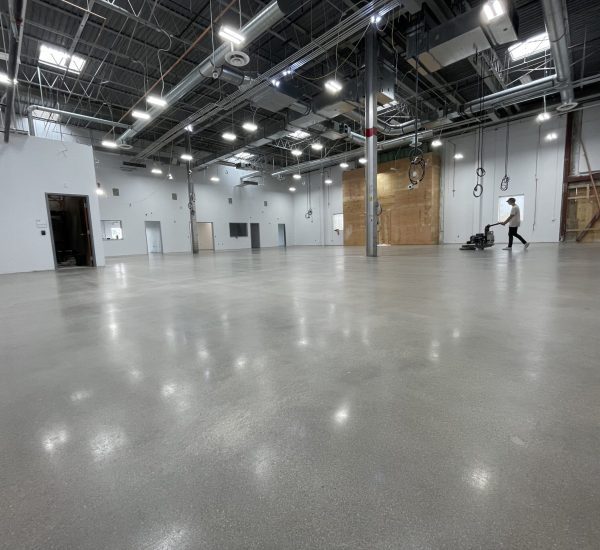
Colorado’s climate is hard on patio surfaces. Pavers shift and settle through freeze-thaw cycles. Composite decking fades under UV and can delaminate over time. Wood decks require annual sealing and periodic board replacement. Painted concrete peels and chips as the paint layer fails to bond permanently to the porous slab.
Professional concrete polishing and staining penetrates and densifies the slab rather than sitting on top of it. The color is in the concrete, not coating it. The densified surface is less porous than untreated concrete, meaning it absorbs less moisture during freeze cycles and resists the spalling that untreated outdoor concrete develops over years. This is a treatment that works with the slab’s long-term behavior rather than fighting it.
Concrete staining adds rich, translucent color that works with the natural character of the concrete rather than masking it. The result does not look painted — it looks like the concrete has color in its depth, which is effectively what happens when the stain penetrates the surface. Colors range from warm earth tones that complement Northern Colorado’s landscape to cooler grey-blues, deep charcoals, and custom blends. We can match your home’s exterior palette, your landscaping, or whatever aesthetic you have in mind for your outdoor space.
Unlike paint or surface coatings that peel and chip, stain that has penetrated the concrete does not separate from the surface. The color is durable because it is chemically part of the surface layer.
Wood decks need annual sealing and periodic board replacement. Pavers need periodic re-sanding and re-leveling. Stamped concrete coatings need reapplication every few years. Polished and sealed concrete patio surfaces require periodic resealing — typically every few years depending on use and UV exposure — which is a straightforward maintenance task compared to the work involved in maintaining wood or composite surfaces.
For day-to-day maintenance, a polished concrete patio rinses clean with a hose. Furniture does not abrade the surface. Bird droppings, spills, and general outdoor grime come off easily. The surface does not harbor moss or mildew in shaded areas the way natural stone and textured surfaces can.
The practical benefits matter, but the visual transformation is what homeowners notice immediately. A grey, utilitarian concrete slab becomes a finished outdoor floor that makes the patio a destination rather than just a place to put furniture. Color adds warmth and intention to the space. The finished surface reads as designed, not poured-and-forgotten.
For homes in Fort Collins, Windsor, Loveland, and Greeley — where outdoor living space is used a significant portion of the year — a patio that looks and functions well increases the practical value of that space and the enjoyment of the home.
Why Choose Us
Warren James — owner and lead craftsman — shows up to every job personally. With over 15 years in the industry, we know that prep work and attention to detail separate beautiful floors from mediocre ones.
Warren James, owner and lead craftsman, personally works every patio project. The assessment, the prep, the staining, and the sealing are done under direct owner supervision. There are no subcontractors, no franchise systems, no day where the person who sold you the job sends someone else to do it.
We grind a sample area on your actual patio concrete before the project starts — no charge. You see the real starting condition of your concrete and the achievable finish before committing. This removes every uncertainty from the decision.
We do not apply indoor concrete treatment products to outdoor surfaces. Everything we use on patio projects is specified for exterior use, UV exposure, and Colorado’s freeze-thaw climate. The products are appropriate for the environment. This distinction matters for how long the result lasts.
We work Monday through Saturday, 7:00 AM to 7:00 PM, and we work around your schedule. If your patio project needs to happen on a weekend or in the early morning before you leave for work, we accommodate that. Outdoor patio work in Northern Colorado also has weather-dependent scheduling considerations — we coordinate to avoid the precipitation and temperature windows that would affect product application.
Our work is reviewed publicly and consistently. 67 five-star Google reviews from homeowners across Fort Collins, Windsor, Loveland, Greeley, and Cheyenne reflect a track record of quality workmanship and professional service. We do not ask for reviews until the job is done and the customer has seen the result.
Warren visits your property and assesses your patio slab condition. We identify existing coatings or treatments, note cracks and surface damage, discuss color and finish options, and grind a sample area on your actual concrete to show you the starting surface quality and what is achievable. You see the result before you decide. Every patio project starts here, at no charge.
We clean, degrease, and prepare the slab surface. Existing coatings and sealers that would prevent new product adhesion are mechanically removed. Cracks are filled and addressed. Rust stains, organic deposits, and efflorescence are treated. The result is a clean, uniform substrate ready for densification and color.
We apply a penetrating densifier rated for exterior and freeze-thaw exposure. This closes the surface pores, increases hardness, and significantly reduces the moisture infiltration that causes freeze-thaw spalling in Colorado winters. For outdoor concrete in this climate, densification is not optional — it is the step that makes the finished surface durable across multiple seasons.
We apply your chosen stain color — acid stain, water-based stain, or dye depending on the aesthetic you want and the concrete's specific chemistry. Acid stains create reactive, variegated color with natural-looking depth. Water-based stains deliver more uniform, consistent color with a wider palette. We discuss the options at the assessment and show you color samples in the context of your specific patio and home exterior.
The final step is a UV-stable exterior sealer that protects the color and the densified surface from UV degradation, weather, and surface abrasion. We use exterior-rated products — not the same products used on interior floors. The sealer adds a sheen level appropriate for outdoor use and provides the surface protection that makes the color investment durable across Colorado's seasons.
Why Concrete Polishing Matters
Patio floor treatment is not identical to basement or interior floor polishing, and any contractor who treats them the same is not accounting for the specific demands of outdoor concrete surfaces. Here is what is different.
Colorado winters subject outdoor concrete to repeated freeze-thaw cycles. Water that infiltrates an untreated slab expands when it freezes, which over time causes spalling — the surface layer of the concrete breaks off in flakes. Densification significantly reduces the porosity of the surface, limiting moisture infiltration and reducing freeze-thaw damage. The products we use for outdoor concrete are specified for exterior use and for this specific climate condition. Note: We do not use the standard indoor polishing process on outdoor patios with a freeze-thaw concrete mix — those slabs require outdoor-specific densifiers and sealers rated for exterior use and UV exposure. This is a detail that distinguishes experienced outdoor concrete contractors from those applying interior methods incorrectly.
Interior concrete sealers are not UV-stable — they yellow and break down under direct sun. Every sealer and topcoat we apply to outdoor patio concrete is UV-stabilized, specifically rated for exterior use and direct sun exposure in high-altitude, high-UV environments like Northern Colorado. The finish holds its appearance through multiple seasons without the yellowing that happens when interior products are used outdoors.
Outdoor patio surfaces need slip resistance, particularly when wet from rain or morning dew. We do not apply a glass-smooth interior polish finish to patios — the finish level and texture are specified to provide appropriate traction for outdoor use. Anti-slip additives to the sealer are available where additional safety margin is desired, and we discuss this at the assessment for every patio project.
Most patio slabs we work on in Northern Colorado have been in place for years and show some level of wear: surface staining from rust, organic material, or prior treatments, minor cracking, efflorescence (white mineral deposits), or rough texture from weather exposure. Surface prep addresses all of these before color and finishing are applied. The patio you get back will not just be colored — it will be clean, repaired, and uniform in a way the original surface was not.
What Our Clients Are Saying
⭐⭐⭐⭐⭐ 4.9 — Based on 67 verified Google Reviews
EXCELLENT Based on 75 reviews
 Posted on Google
 Tanya MielkeWarren did a great job on my concrete floors. He worked with me on scheduling and got the job done FAST! My floors got a second life! Highly recommend.Posted on Google
 Jim CursleyI’ve been a builder and general contractor for 25 years; I’ve seen it all: good, great, fantastic and horrible. Warren and Concrete Polishing of Northern Colorado are firmly in the fantastic category.Posted on Google
 Brian JonesConcrete Polishing of Colorado did a tremendous job finishing our patio! They were able to grind down the top of 1/2 new and 1/2 old concrete, each with different color tones and make them match. The crew did great and Warren was also great to work with! Would highly recommend.Posted on Google
 Kathleen SpielmanThe crew was very professional and clean. They did an great job!Posted on Google
 Andy RexWarren and his crew did a great job prepping a concrete basement floor in an old town renovation. Very responsive to my calls/texts. Great work. I will use them again!Posted on Google
 Jeff HeatonWarren and his crew are great. Communication and quality of work are on point. They polished a commercial unit floor and an exterior patio for me. Don’t hesitate to use them.Posted on Google
 Gary PickeringVery skilled craftsmen. Did a great job for us and finished the job on time and within budget.Posted on Google
 Bryan SchoskerWarren and his crew were great. Highly recommend for residential or commercial job.Posted on Google
 Michael WellnitzGreat job and fastPosted on Google
 AndrewThese guys are amazing at what they do. They take pride in their work, and get the job done!Verified by TrustindexTrustindex verified badge is the Universal Symbol of Trust. Only the greatest companies can get the verified badge who has a review score above 4.5, based on customer reviews over the past 12 months. Read more
Common Questions
In most cases we work with the existing slab — that is the point. Replacement is expensive and disruptive. If your existing patio slab is structurally sound, we can densify, stain, and seal it to give it a completely different appearance and significantly better surface performance. We assess the slab condition at the free evaluation and tell you honestly if there are structural issues that would need to be addressed before treatment.
With UV-stable sealers properly applied, color fade is minimal over the normal maintenance cycle. The sealer is what protects the color from UV degradation. When the sealer needs reapplication — typically every two to four years outdoors depending on sun exposure and use — we reseal the surface and the color is restored. This is a simpler and less expensive maintenance process than refinishing or replacing any wood or composite outdoor surface.
The densification step significantly reduces moisture infiltration, which is the primary cause of freeze-thaw spalling in untreated outdoor concrete. The exterior-rated sealer adds a second layer of moisture resistance. Treated patio concrete performs substantially better through Colorado winters than untreated slabs. As with any outdoor surface in a freeze-thaw climate, some surface wear over many years is normal — but the treated surface is meaningfully more durable than untreated concrete.
The palette is wide — from warm terracottas and tans that complement Northern Colorado’s landscape to cooler slate blues, charcoals, and greens. We can work toward matching your home’s exterior trim color, your landscaping palette, or a specific reference color you have in mind. We show you color samples at the assessment and discuss how each option interacts with your specific concrete’s base color. Two patios in different colors will not look identical even with the same stain, because the concrete’s natural character shows through.
A typical residential patio project takes one to two days. There is a curing period after sealer application during which the surface should not be exposed to water — we give you specific guidance on timing and what to avoid during that window. We schedule around weather forecasts to avoid rain during or immediately after application.
It depends on the condition and type of existing treatment. Some sealers and paints can be mechanically removed to expose clean concrete for treatment. Others have penetrated too deeply or bonded too strongly to be practically removed, which affects staining options. We assess this at the free evaluation and tell you what is achievable with your existing surface.
Not sure if we reach your location? Call (970) 215-9106 and we’ll tell you directly.
The free on-site sample takes 20 minutes and costs nothing. Warren visits your property, assesses your patio slab, and grinds a small sample area so you can see the actual result on your concrete — not a stock photo of someone else’s floor. That sample is your basis for deciding, and there is no obligation attached to it.