
⚡ Limited availability: Schedule this week & get a free on-site sample — Book Now →
Fort Collins, CO · Owner Operated
Concrete Surface Preparation in Fort Collins, CO
Owner operated with 15+ years of experience. We transform dull concrete into brilliant, durable floors — free on-site sample so you see results before you commit.
- Free Quote
- Strong Warranty
- Fast Turn Around
- Owner Operated
Get Your Free Estimate
No obligation — on-site quote from an owner-operated expert
⚠️ Limited availability — book your slot today
Free
On-Site Sample
Professional Concrete Grinding, Shot Blasting & Surface Profiling for Coatings, Polishing & Flooring Installation
- Diamond grinding · Shot blasting · Scarifying · Crack repair
- HEPA-filtered dust extraction on all grinding operations
- Free on-site assessment — written scope of work and price before any work begins
Every concrete coating, stain, sealer, and overlay is only as good as the surface beneath it. The industry standard for coating failure is not the coating itself — it is inadequate surface preparation. Coatings peel from improperly prepped concrete within months. The same coating, applied to properly prepared concrete, lasts a decade or more.
At Concrete Polishing of Northern Colorado, surface preparation is not an add-on service. It is the foundation of every project we complete. We use professional diamond grinding, shot blasting, and scarifying equipment — the same tools used on airport runways, industrial facilities, and major commercial floor installations — to get your concrete clean, profiled, and ready for whatever you are applying next.
Call 970-215-9106. We assess your floor, give you a written scope of work, and tell you exactly what preparation your specific slab needs.
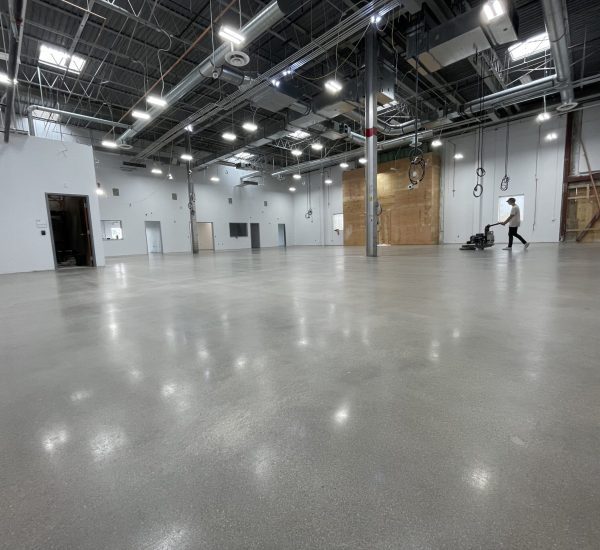
Why Surface Preparation Is the Most Important Step in Any Concrete Project
Concrete surface preparation is boring to talk about. It is not glamorous. You cannot Instagram it. But it is the single variable that most determines whether a concrete project lasts or fails.
Here is why: concrete is a porous material. Its surface carries a thin layer of ‘laitance’ — weak cement paste, curing compound residue, and carbonation that forms naturally during curing. This layer is weak, dusty, and provides no adhesion for coatings or stains. Applying a coating over laitance is like painting over loose, chalky paint — the coating is bonded to the weak layer, not the strong concrete beneath it.
Beyond laitance, most floors carry additional contamination: oil, grease, chemical spills, old coatings, adhesive residue, curing compounds, and dirt that has penetrated the pores. All of these block adhesion. None of them come off with scrubbing.
Professional surface preparation removes all of this mechanically, down to clean, sound concrete. It also creates a surface profile — measured by the International Concrete Repair Institute (ICRI) Concrete Surface Profile (CSP) scale from 1–10 — that provides the mechanical ‘tooth’ for coatings to grip. Different products require different CSP levels. Applying an epoxy coating over a CSP-1 surface when the manufacturer specifies CSP-3 will result in premature delamination regardless of product quality.
Why Concrete Polishing Matters
The Real Costs of Skipping or Under-Investing in Surface Prep
Concrete flooring is expanding its borders — and the right craftsman transforms a boring grey slab into a brilliant, easy-clean, long-lasting surface.
Coating Failure and Redoing the Job
The most direct cost is having to redo a failed coating. This means stripping the failed product, prepping the surface properly this time, and recoating. You pay for materials twice and labor twice (or more, if the failure caused additional surface damage). In commercial settings, you also pay for the facility downtime twice. The 'money saved' by cutting corners on prep reliably costs more in rework than the prep itself would have.
Damage to the Underlying Slab
Peeling coatings are not just ugly — they can pull aggregate from the concrete surface when they delaminate, leaving a rougher, more damaged substrate than what you started with. The more adhesive the coating, the worse the surface damage when it fails. That damage has to be ground out and repaired before the next attempt. Surface prep before the first application is always less work than surface prep after a failure.
Liability and Safety
A delaminating floor coating is a trip hazard. Bubbled or peeling coatings catch wheels, create uneven surfaces, and leave jagged edges. In any commercial or industrial setting where OSHA safety standards apply, a failing floor coating is not just a maintenance issue — it is a liability.
Our Services
Surface Preparation Methods We Use
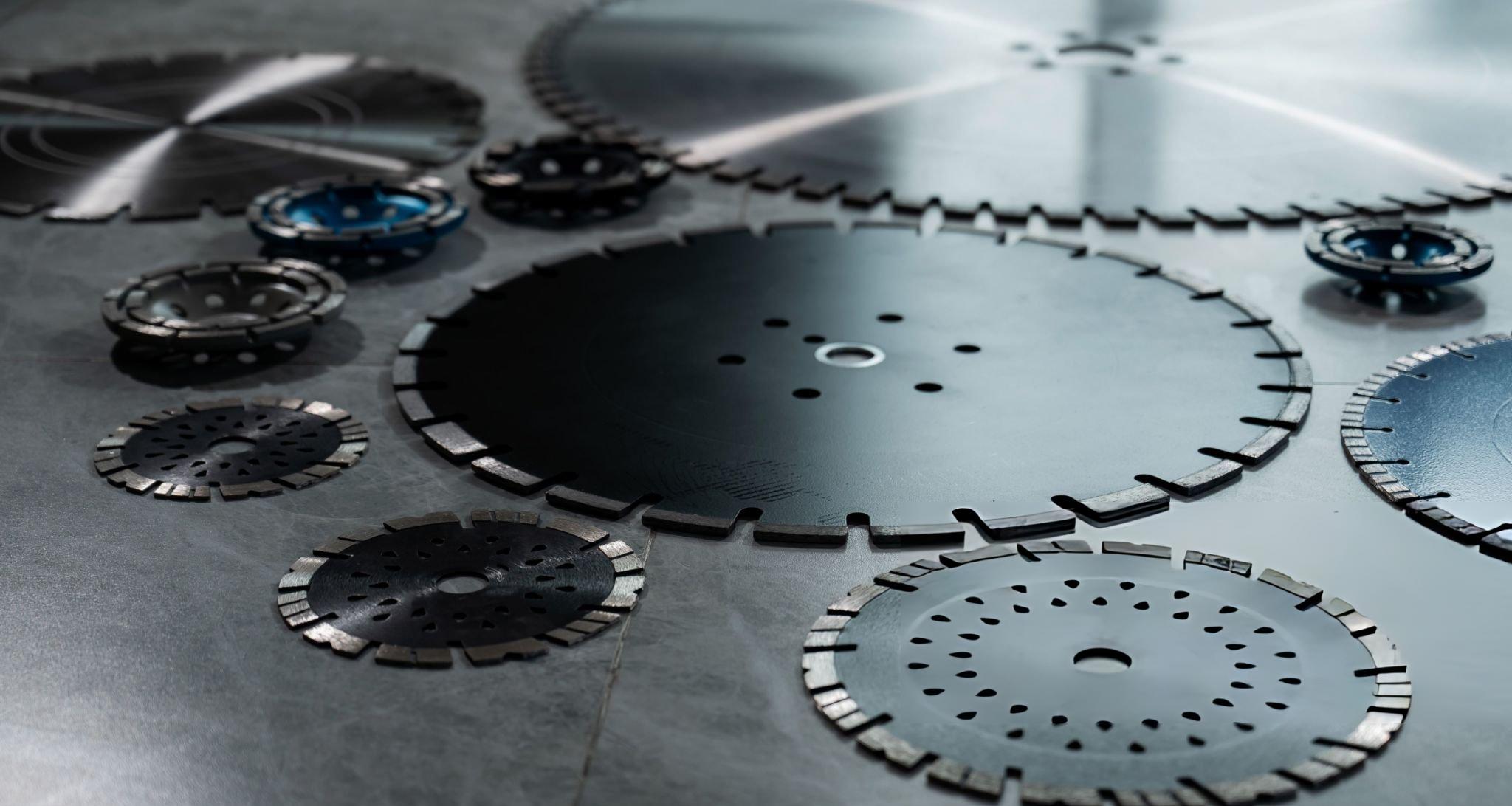
Diamond Grinding
Our primary method for most residential and commercial concrete floors. We use planetary grinders — typically Husqvarna or Lavina equipment — fitted with diamond tooling appropriate for the surface condition and desired profile. Diamond grinding removes surface laitance, light coatings, adhesive residue, and contamination while creating a consistent CSP appropriate for your next application.
Diamond grinding is precise and controllable. We can remove just the top surface film for light prep or grind deeper for aggressive coating removal. The process generates dust, which we manage with integrated HEPA-filtered vacuum systems — keeping your facility clean and air quality safe throughout the job.
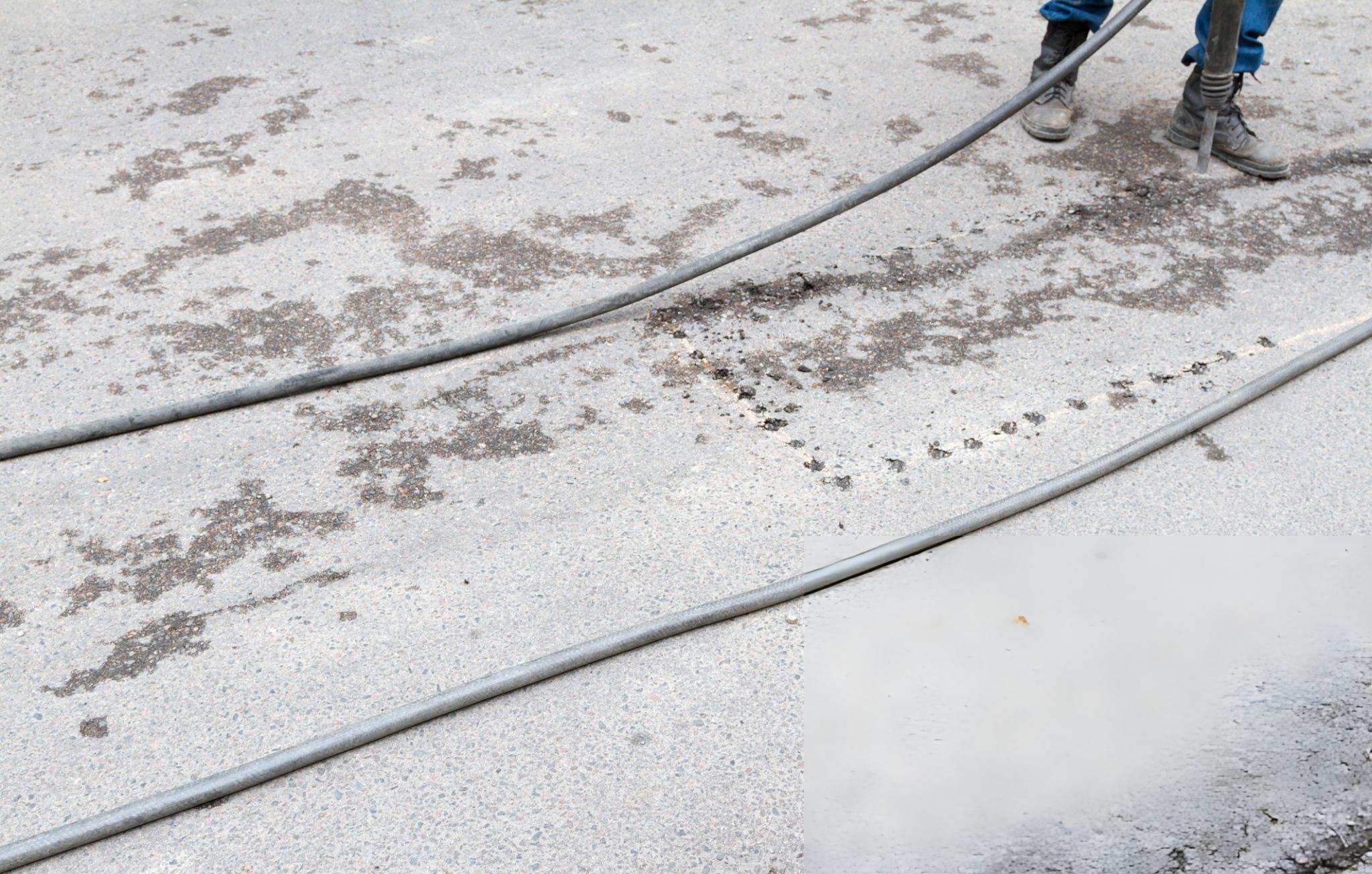
Shot Blasting
Shot blasting uses a self-contained machine that propels steel shot at the concrete surface at high velocity, then recovers all shot and debris in a closed-loop vacuum system. The process is completely dust-free — the machine contains everything — making it ideal for occupied facilities, food-safe environments, and anywhere airborne dust is a concern.
Shot blasting is highly effective for large warehouse and industrial floors. It creates a consistent, medium-profile surface across large areas faster than grinding. The CSP produced is well-suited for most commercial coatings and epoxy systems. It is not suitable for detailed work near walls or columns.
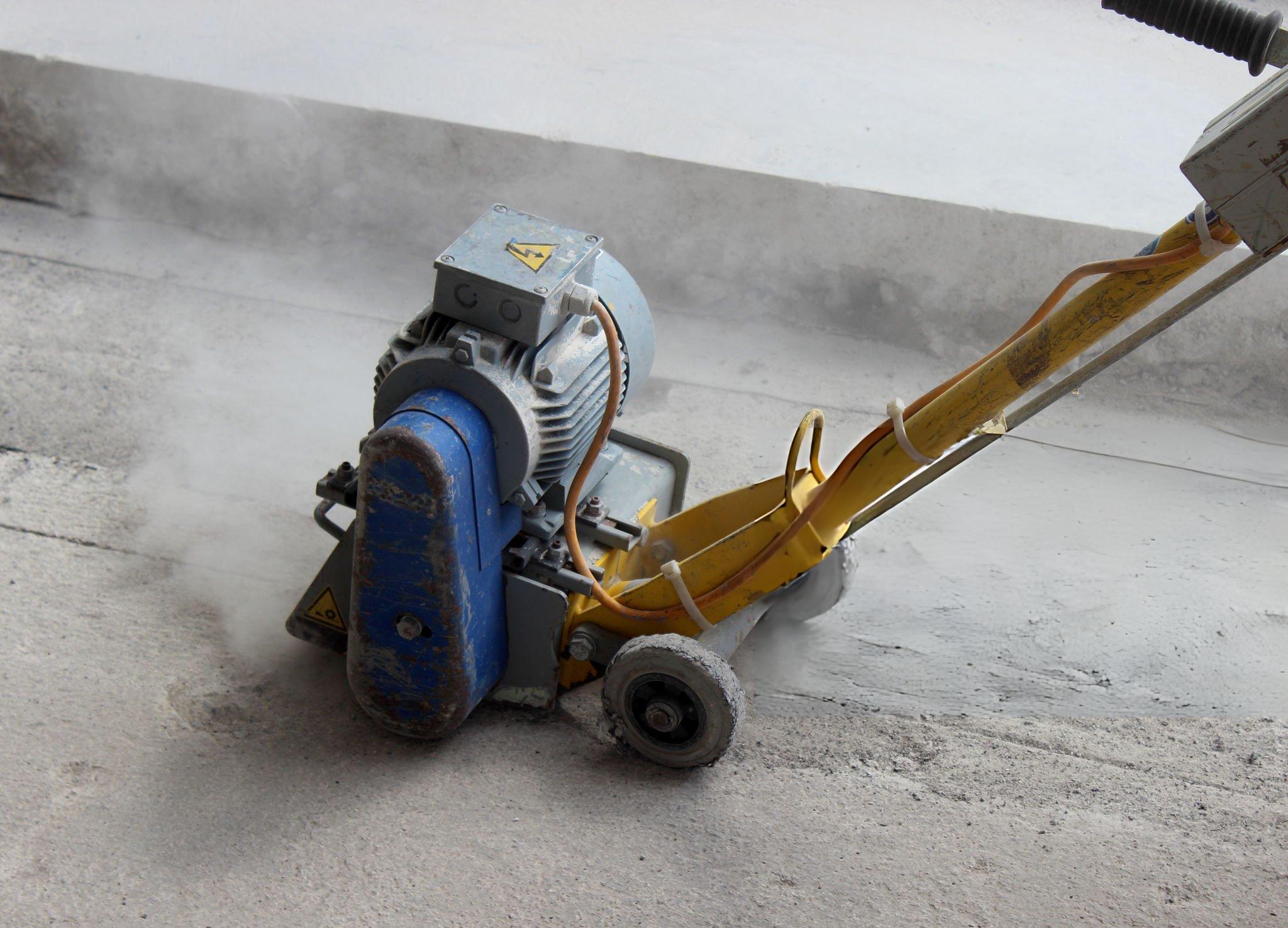
Scarifying
When you need aggressive coating removal — thick epoxy build-up, rubber coatings, mastic adhesive, bituminous materials — scarifying is the right tool. A scarifier uses rotating cutting wheels to tear into the surface and remove materials that grinding alone cannot handle. The result is a rough, heavily profiled surface (CSP 6–9) appropriate for thick coatings, overlays, and mortar beds.
Scarifying is also used for removing trip hazards at concrete slab joints, leveling heavily uneven surfaces, and correcting problem areas before overlay installation.
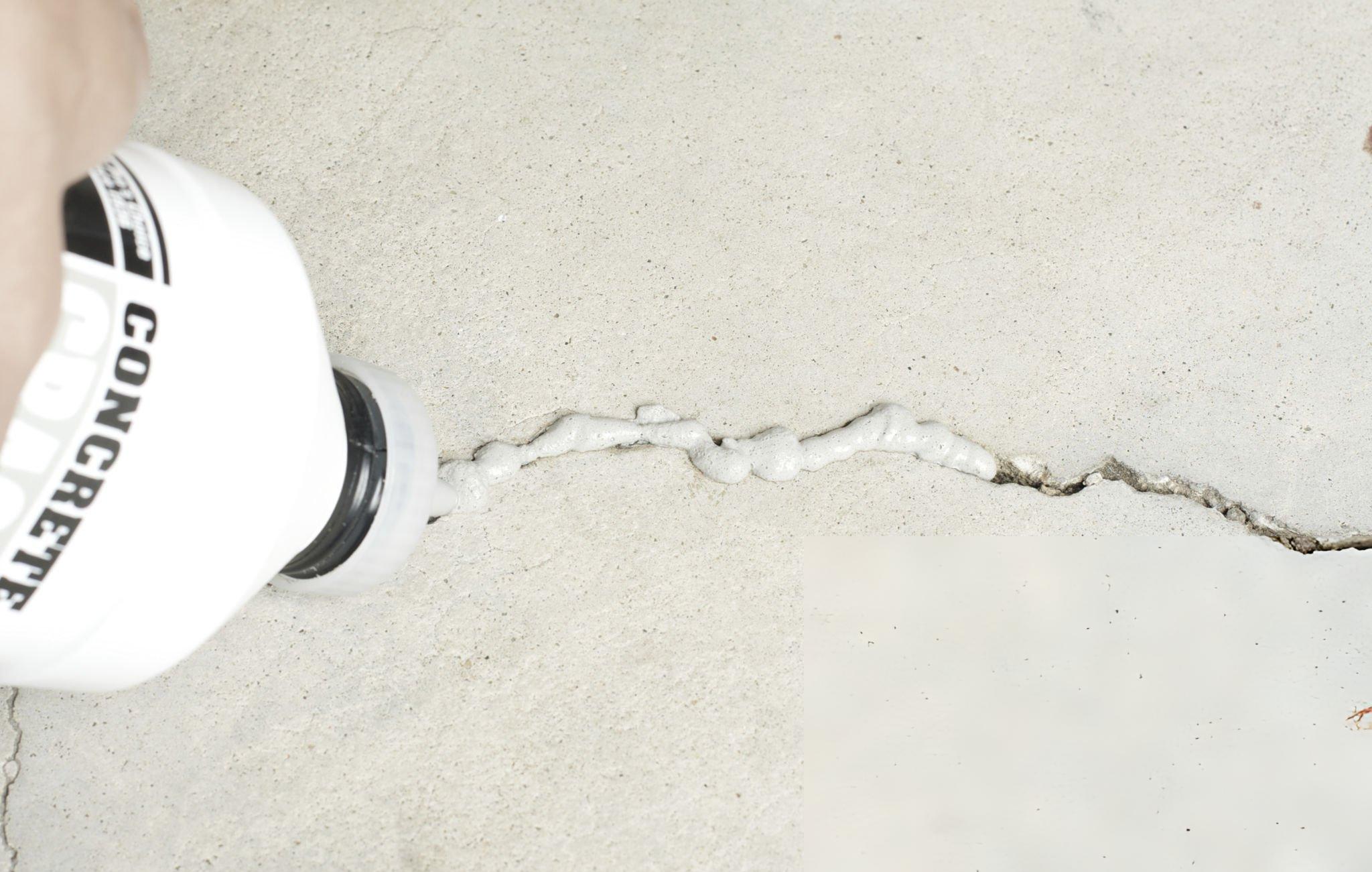
Crack Repair and Joint Filling
Surface preparation is not only about the flat field of the floor. Cracks and control joints must also be addressed before coatings are applied — otherwise the crack telegraphs through the coating and splits it as the concrete moves. We repair cracks with the appropriate filler:
- Structural cracks — epoxy injection for deep, structural cracks that need rigid repair
- Non-structural / hairline cracks — semi-rigid polyurea or epoxy-polyurea hybrid fillers that allow minor movement
- Control joints — filled with semi-rigid material and tooled flush, preventing coating failure at joints
We identify crack types during the assessment and specify the right repair approach for each. Using rigid epoxy in a crack that needs to flex will result in the repair cracking again. Using flexible filler in a structural crack will not hold. Material selection matters.
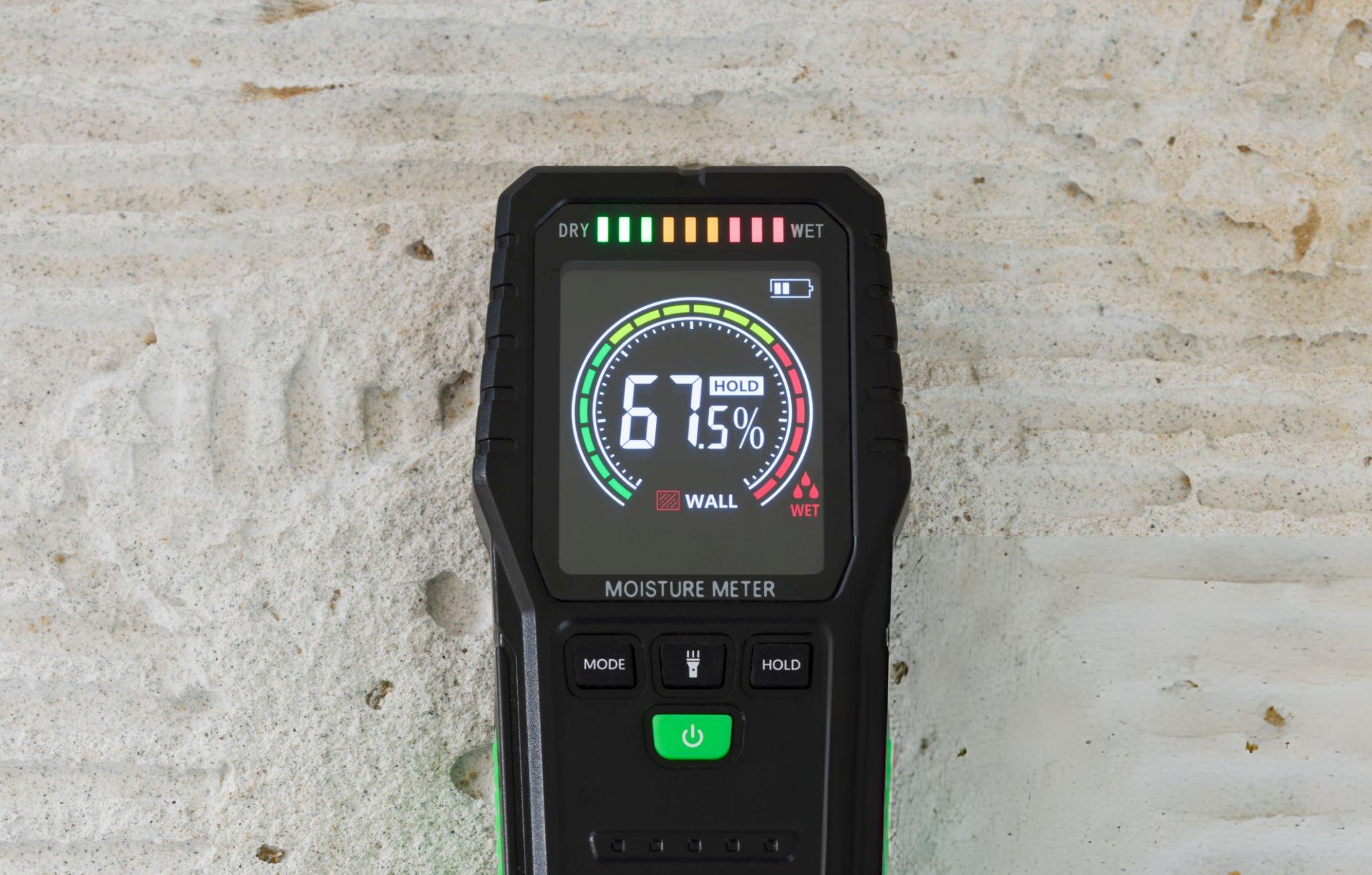
Moisture Testing and Vapor Mitigation
Moisture vapor transmission (MVT) from below the slab is the leading cause of epoxy and urethane coating failure on concrete. If the concrete is wetter than the coating manufacturer’s specification — typically 3 lbs per 1,000 sq ft per 24 hours or a relative humidity of 75–80% — the coating will eventually bubble and delaminate from below.
We test for moisture vapor emission using ASTM F1869 calcium chloride tests and ASTM F2170 relative humidity probes before specifying any coating system. If moisture levels are elevated, we specify a vapor barrier primer or surface-applied moisture mitigation system before the finish coat. Skipping this test is one of the most common causes of expensive coating failures.
Not Sure Which Service Is Right for You?
We offer a free on-site consultation — Warren personally visits and shows you a sample result before you commit to anything.
Why Choose Us
We Treat Your Floor Like It's Our Own
Warren James — owner and lead craftsman — shows up to every job personally. With over 15 years in the industry, we know that prep work and attention to detail separate beautiful floors from mediocre ones.
- Free on-site sample — see results before you commit
- Dry-grind process — zero dust mess
- Works around your schedule, including off-hours
- Strong warranty on every job
- ⭐ Google Verified
- 🏠 HomeAdvisor
- 📋 Angi Listed
- ⭐ Yelp Reviewed
Our Surface Prep Process — From First Call to Ready-to-Coat
Free On-Site Assessment
We visit your facility, walk the floor, test for moisture, check for contamination, assess existing coatings and cracks, and determine the correct prep method. We bring ICRI CSP comparison tiles so you can see exactly what profile your floor will have after prep. We give you a written scope of work and price on the spot — no surprises.
Scheduled Installation
We work around your schedule. Most surface prep work generates noise and dust — we schedule to minimize impact on your operations and use dust extraction on all grinding. Large industrial floors are typically prepped in sections so partial use of the facility can continue.
Preparation Work
We execute the agreed scope: grinding, shot blasting, or scarifying the field; repairing cracks; filling joints; addressing contamination. We document before-and-after conditions with photos. Moisture testing is performed after prep to confirm the surface is ready for your coating or stain application.
Handoff to Coating Application
If you are having us apply the coating or stain, we proceed directly. If you are using another contractor for the finish, we provide documentation of the prep work completed, the CSP achieved, and the moisture test results for their records.
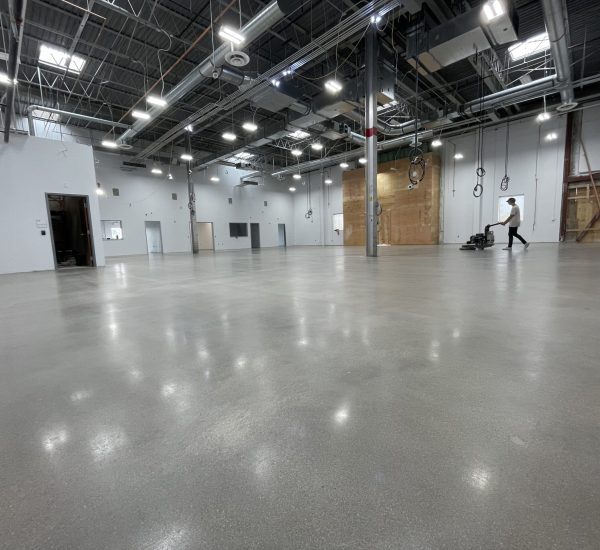
Owner Operated · Free On-Site Sample
When You Need Professional Surface Preparation
Surface preparation is required any time a material is applied to concrete that needs adhesion. Specific situations where proper prep is critical:
- Before epoxy coatings — requires CSP 3–4 minimum for mechanical adhesion; oil and grease contamination must be fully removed
- Before polyurethane or polyaspartic coatings — similar requirements to epoxy; higher sensitivity to moisture
- Before concrete staining — stain cannot penetrate sealed or contaminated concrete; the surface must be clean and open
- Before concrete polishing — the grinding sequence in polishing is itself surface preparation; existing coatings must be removed first
- Before flooring installation — vinyl plank, LVT, ceramic tile, and hardwood flooring all require a flat, clean substrate with no contaminants that would interfere with adhesive bond
- Before overlays and microtopping — thin overlay systems are extremely sensitive to surface quality; even minor contamination causes delamination
- New construction slabs — curing compounds used during concrete placement seal the surface and must be removed before any coating or stain is applied
- After water or chemical damage — damaged surface layers must be ground off before new material is applied
- When an existing coating is failing — don’t just recoat over a failing floor; identify why it failed, address the cause, and prep properly before the next application
What Proper Surface Prep Looks Like — Specific Standards
Professional surface preparation is not subjective. Industry standards exist for a reason:
The ICRI CSP scale runs from 1 (nearly smooth, like a troweled slab) to 10 (heavily sandblasted or scarified). Each coating system has a minimum CSP requirement from the manufacturer. Thin coatings require CSP 1–3. Thicker industrial coatings require CSP 3–5. Overlays and mortar beds require CSP 5+. We match the prep method and depth to the CSP required by your chosen coating system.
Visible oil stains are the obvious problem. More insidious is oil contamination that has penetrated deep into the concrete pores and is not visible on the surface. We test for contamination using the water absorption test: clean, properly prepped concrete absorbs a drop of water within seconds. Contaminated concrete beads it up. If the surface fails the absorption test, additional degreasing and grinding is required.
Acid-etched concrete has a lower pH that can interfere with some coating chemistries. We test pH after prep and, if needed, neutralize and rinse before coating application.
Areas We Serve
We provide professional concrete surface preparation across Northern Colorado and Southern Wyoming:
Not seeing your location? Call us. We serve the entire Front Range corridor and Southern Wyoming.
What Our Clients Are Saying
Our Testimonials
⭐⭐⭐⭐⭐ 4.9 — Based on 67 verified Google Reviews
★★★★★
“Warren did an incredible job on our garage floor. He came out, showed us a sample, and the final result far exceeded our expectations. Highly recommend.”
— Mike T., Fort Collins CO
★★★★★
“Owner operated means you actually deal with the expert the whole time. Zero mess from the dry-grind process. The floor looks like glass. Worth every penny.”
— Sarah L., Windsor CO
★★★★★
“The free sample was what sold me. I could see the exact result before committing. The whole project was done on time, on budget, and the floor is stunning.”
— James R., Greeley CO
Common Questions
Frequently Asked Questions
Almost certainly yes. Consumer-grade epoxy kits include acid-etching instructions because the manufacturer knows that most homeowners will not have diamond grinding equipment. Acid etching is the minimum viable prep — it is better than nothing, but it does not remove deep contamination, does not address moisture, and does not produce consistent CSP across a large area. Professional diamond grinding produces a more consistent, better-bonded surface and dramatically increases the longevity of even a consumer-grade coating.
Visual cleanliness and coating-ready cleanliness are not the same thing. Curing compounds, carbonation, and light contamination are invisible to the eye but completely block coating adhesion. The water absorption test is the reliable check: if a drop of water sits on the surface rather than soaking in within a few seconds, the surface needs prep regardless of how it looks.
Yes, but it takes multiple steps: degreasing with a penetrating degreaser, allowing dwell time, scrubbing, rinsing, and then mechanically grinding the surface. In severe cases of deep oil contamination, some surface porosity issues may remain even after aggressive prep. We tell you honestly if contamination is so severe that it will affect coating performance.
All of our grinding operations use integrated HEPA-filtered dust extraction. We generate minimal airborne dust. Shot blasting is completely self-contained and produces zero airborne dust. We leave facilities in clean condition — not covered in concrete dust.
Both. We are a full-service concrete flooring contractor. We can prep the surface and then apply polishing, staining, or sealing in a continuous project. We can also do prep only if you are working with another coating contractor for the finish coat.
A typical commercial floor of 3,000–5,000 sq ft takes 4–8 hours for diamond grinding prep. Shot blasting the same area is faster. Scarifying with extensive crack repair takes longer. We give you a specific timeline during the free assessment.
Pricing depends on square footage, the prep method required, the extent of contamination and crack repair, and accessibility. We provide an all-inclusive written quote after the site assessment — prep, crack repair, and moisture mitigation if needed are all priced separately so you can see exactly what you are paying for.
Schedule Your Free Floor Assessment
Call 970-215-9106 or visit northernconcretepolishing.com/contact-us. We come to your site, assess your concrete, tell you exactly what preparation is needed, and give you a written scope and price before any work begins. Free assessments are available Monday through Saturday, 7:00 AM to 7:00 PM.