
Rated 5 Star on Google





Concrete floors in Fort Collins homes and businesses often go unnoticed until cracking, dusting, or staining becomes a real problem. Polished concrete addresses these issues directly by sealing and strengthening the surface, making it easier to maintain and far more resistant to everyday wear. Concrete Polishing of Northern Colorado serves Fort Collins and the surrounding region, providing grinding, honing, staining, and polishing services for both residential and commercial properties.
Concrete Polishing of Northern Colorado handles everything from single-room residential floors to large-scale commercial facilities, using diamond grinding equipment and densifiers to produce surfaces that are hard, low-maintenance, and visually consistent.
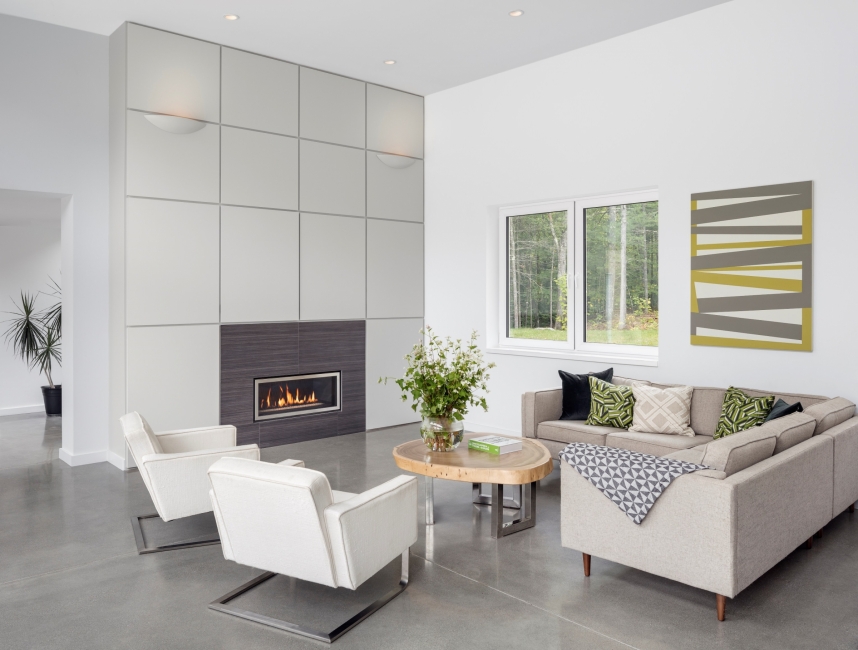
We work with homeowners across Fort Collins and the surrounding areas to polish basement floors, garage floors, kitchen floors, and living spaces. Polished concrete in a home setting offers a practical alternative to tile, hardwood, or vinyl — no grout lines, no peeling edges, and no refinishing every few years.
Our process starts with grinding the surface to remove existing coatings, stains, or imperfections. We then apply a chemical hardener and progressively refine the surface through multiple diamond grit passes. The result is a floor with a consistent sheen and a surface that resists moisture, scratches, and everyday foot traffic.
Common residential applications:

Commercial and industrial floors take more punishment than residential ones. We use the same diamond grinding and densifying process, but with equipment scaled to handle larger square footage efficiently and with tighter tolerances for flatness and consistency.
Polished concrete holds up well in high-traffic environments because the surface hardener chemically bonds with the concrete rather than sitting on top of it as a coating would. This means no peeling, no re-coating schedules, and easier daily cleaning with standard floor equipment.
Well-suited for:
| Setting | Why Polished Concrete Works |
|---|---|
| Retail spaces | Reflects light, reduces overhead lighting costs |
| Warehouses | Resists forklift traffic and heavy loads |
| Restaurants | Easy to sanitize, no grout to trap debris |
| Office buildings | Low maintenance, professional appearance |

Polished concrete is not limited to a plain gray surface. We offer multiple finish levels, aggregate exposure options, and color treatments that allow homeowners and business owners to match a specific aesthetic.
Finish levels range from a low matte sheen to a high-gloss reflective surface. Aggregate exposure can be kept minimal for a smooth, uniform look, or ground deeper to reveal the stone within the concrete slab for a more textured visual effect.
Additional options include:
Not every floor needs the same finish. The right choice depends on your use case, the condition of your existing concrete, and how much of the aggregate you want to see.

The most refined look. We grind only shallow enough to remove the surface paste, leaving the concrete’s natural cream layer intact. The result is a smooth, matte-satin finish with minimal aggregate visible. Best for office environments, lobbies, and retail spaces that want a clean, understated appearance. Requires the concrete surface to be in good condition — deep cracks or patches will be visible.
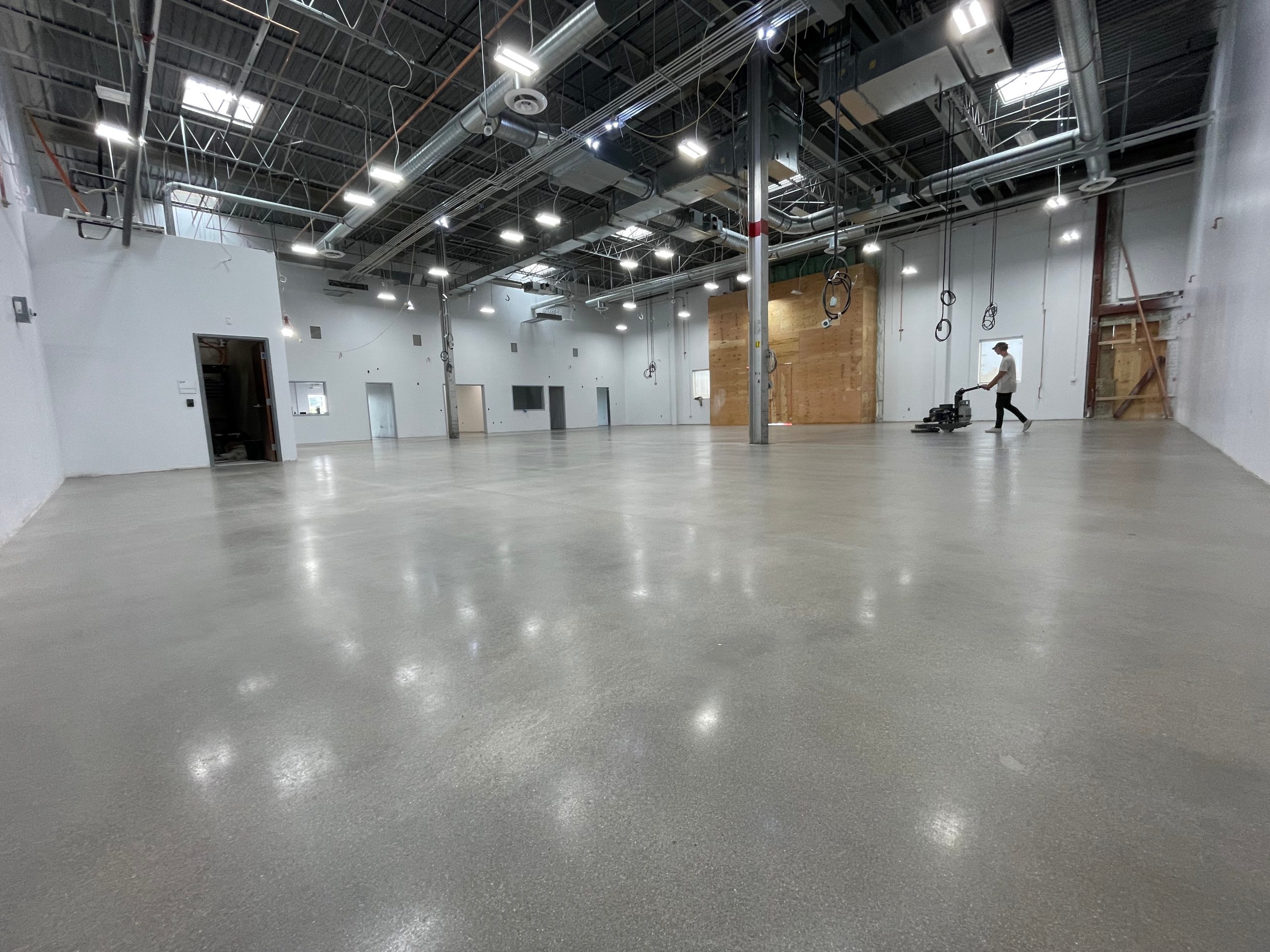
The most popular commercial finish. We grind slightly deeper to expose fine aggregate — the natural sand and small stones in the concrete mix — creating a textured, mid-gloss appearance with visible character. Hides imperfections better than cream polish and works in almost any setting: warehouses, showrooms, restaurants, medical facilities, and garages.

A deeper grind that reveals large aggregate — the bigger stones in the concrete mix — for a bold, terrazzo-like look with dramatic visual depth. Popular in hotel lobbies, showrooms, and architectural projects where the floor is a design feature, not just a functional surface. Requires a concrete mix with good aggregate distribution; we assess your slab first.

We can incorporate concrete dyes and stains at any stage of the polishing process for color effects, decorative borders, logos, and patterns. Color polished concrete is increasingly common in retail and hospitality environments as a cost-effective alternative to decorative tile or stone.
Professional concrete polishing produces floors that last longer, cost less to maintain, and look better than most standard flooring alternatives.
Polished concrete is one of the hardest finished floor surfaces available. The grinding and honing process densifies the top layer of the slab, and when combined with a chemical hardener, the surface becomes significantly more resistant to abrasion, foot traffic, and heavy loads.
Unlike tile or hardwood, polished concrete won’t chip, warp, or delaminate over time. A professionally polished floor in a commercial or residential setting can last decades without needing to be replaced entirely.
Key durability factors include:
Day-to-day upkeep of polished concrete is straightforward. Routine dust mopping and occasional damp mopping with a pH-neutral cleaner is all that’s typically needed to keep the surface in good condition.
There are no waxes, strippers, or specialty products required. This makes polished concrete a practical choice for both homeowners and business owners who want to reduce ongoing maintenance costs.
| Flooring Type | Maintenance Frequency | Products Needed |
|---|---|---|
| Polished Concrete | Low | Dust mop, neutral cleaner |
| Hardwood | Medium–High | Polish, refinishing products |
| Tile | Medium | Grout cleaners, sealers |
| Vinyl/LVP | Medium | Specific cleaners, periodic sealing |
A professionally polished floor has a clean, modern appearance that works in both residential and commercial environments. The finish can range from a low-sheen satin to a high-gloss reflective surface, depending on your preference.
The reflective quality of a polished floor can also reduce the need for artificial lighting in larger spaces, which is a practical benefit in offices or retail settings.
From a property value standpoint, polished concrete is a durable, finished surface that appeals to buyers and tenants. It signals quality construction and reduces the need for future flooring investment.
Skipping professional concrete polishing—or having it done incorrectly—leads to faster floor degradation, higher upkeep costs, and measurable safety risks for anyone using the space.
Unpolished concrete is porous. Without a properly polished surface, moisture, oils, and chemicals penetrate the slab and break down the material from within.
Improperly polished floors are a separate concern. If the grinding sequence is rushed or the wrong diamond tooling is used, the surface may look finished but lack the density needed to resist wear. This results in surface dusting, pitting, and spalling that worsen over time.
Common causes of premature deterioration include:
In high-traffic commercial or industrial settings in Fort Collins, these issues compound quickly.
A properly polished floor requires minimal upkeep. An unpolished or poorly finished floor does not. Dust mop frequency increases, cleaning products get used faster, and staining becomes a recurring problem that requires reactive treatments rather than simple routine care.
Repairs add up fast. Patching spalled areas, applying corrective coatings, or re-grinding an improperly polished floor often costs significantly more than getting the job done right the first time.
For business owners especially, downtime for floor repairs also carries an indirect cost—operations may need to pause or shift to allow access.
Unpolished concrete can be unpredictable underfoot. Rough, uneven surfaces created by surface deterioration increase trip hazards, particularly in commercial spaces with foot traffic.
Improperly polished floors introduce a different risk. An over-polished surface with no slip-resistant finish can become dangerously slick when wet. This is a known flaw of concrete polishing done without proper planning or expertise.
Key safety risks include:
| Condition | Risk |
|---|---|
| Surface dusting | Reduced traction, slippery residue |
| Uneven grinding | Trip hazards at transition points |
| No slip-resistant topcoat | High slip risk in wet conditions |
| Spalling or pitting | Catch points for footwear, potential falls |

We have worked on concrete floors for over 15 years, serving homeowners and business owners across Fort Collins, Greeley, Loveland, Windsor, and Cheyenne, WY. That kind of experience means we can accurately assess your floor's condition and recommend the right approach — whether that's grinding, honing, or a full polish.

Our process eliminates the need for waxes, coatings, or harsh chemical treatments that break down over time and require repeated application. The result is a low-maintenance surface that doesn't generate ongoing waste.

We treat each project as a functional investment for the client, not just a job to complete. Our goal is a floor that performs well and looks right for the space — whether that's a garage slab, a retail floor, or a basement.
Warren James — owner and lead craftsman — shows up to every job personally. With over 15 years in the industry, we know that prep work and attention to detail separate beautiful floors from mediocre ones.
Every job starts with an assessment. We look at your slab’s hardness, condition, existing coatings, moisture levels, and the finish you want. That determines our tooling selection and grinding sequence. Here is what happens from there:
We walk the floor, check for cracks, delaminations, moisture vapor emission, and hardness variations. Concrete hardness varies significantly by mix design and age — softer slabs require different tooling than hard slabs, and using the wrong diamonds wastes time and produces poor results. We identify all patches, repairs, and coating remnants before we start.
We start with coarse diamond tooling (typically 30–80 grit) to remove existing coatings, level the surface, flatten high spots, and open the concrete. This is where we set the finish level — how deep we grind determines how much aggregate will show in the final result. Any crack repairs, spall fills, or leveling work happens at this stage.
We move through successively finer diamond grits — 100, 200, 400 — refining the scratch pattern from each previous pass. Each step removes the scratches from the step before. By 400 grit, the floor has a consistent honed finish and is ready for densification.
We apply a penetrating lithium silicate densifier. It reacts with the free lime in the concrete to form calcium silicate hydrate (CSH) — the same compound that makes concrete hard. The densifier fills the open pores, hardens the surface, and dramatically increases scratch resistance. This is what separates a truly durable polish from a surface that looks good but scuffs easily.
After densification, we move through fine diamond tooling: 800, 1,500, and 3,000 grit (depending on the gloss level you want). Each pass increases clarity and reflectivity. At 3,000 grit, the floor has a mirror-like finish.
We finish with a penetrating lithium silicate guard — a stain-resistant, abrasion-resistant treatment that seals the surface without adding a topcoat. The guard is invisible and does not change the floor's appearance. It makes the surface easy to clean and resistant to oil, water, and chemical staining. No recoating is required — the protection is built into the slab.

Located in northern Colorado, Fort Collins is a charming city with a rich history dating back to the mid-1800s. Originally established as a military outpost, Fort Collins has grown into a vibrant community known for its outdoor recreational opportunities, thriving arts scene, and top-notch restaurants and breweries.
With a low crime rate, excellent schools, and abundant job opportunities, Fort Collins consistently ranks as one of the best places to live in the United States. Residents enjoy a high quality of life, thanks to the city’s numerous parks, bike trails, and cultural events.
Visitors to Fort Collins can explore the historic Old Town district, which boasts beautiful brick buildings housing shops, galleries, and restaurants. Nature lovers will appreciate the nearby Horsetooth Reservoir and Lory State Park, offering hiking, biking, and water activities.
As a concrete polishing contractor serving the Fort Collins area, we want to express our gratitude to the residents for their support and trust in our services. We look forward to continuing to provide top-notch concrete polishing for our customers in this wonderful community.
Commercial and residential clients across Northern Colorado and Southern Wyoming:
EXCELLENT Based on 75 reviews
 Posted on Google
 Tanya MielkeWarren did a great job on my concrete floors. He worked with me on scheduling and got the job done FAST! My floors got a second life! Highly recommend.Posted on Google
 Jim CursleyI’ve been a builder and general contractor for 25 years; I’ve seen it all: good, great, fantastic and horrible. Warren and Concrete Polishing of Northern Colorado are firmly in the fantastic category.Posted on Google
 Brian JonesConcrete Polishing of Colorado did a tremendous job finishing our patio! They were able to grind down the top of 1/2 new and 1/2 old concrete, each with different color tones and make them match. The crew did great and Warren was also great to work with! Would highly recommend.Posted on Google
 Kathleen SpielmanThe crew was very professional and clean. They did an great job!Posted on Google
 Andy RexWarren and his crew did a great job prepping a concrete basement floor in an old town renovation. Very responsive to my calls/texts. Great work. I will use them again!Posted on Google
 Jeff HeatonWarren and his crew are great. Communication and quality of work are on point. They polished a commercial unit floor and an exterior patio for me. Don’t hesitate to use them.Posted on Google
 Gary PickeringVery skilled craftsmen. Did a great job for us and finished the job on time and within budget.Posted on Google
 Bryan SchoskerWarren and his crew were great. Highly recommend for residential or commercial job.Posted on Google
 Michael WellnitzGreat job and fastPosted on Google
 AndrewThese guys are amazing at what they do. They take pride in their work, and get the job done!Verified by TrustindexTrustindex verified badge is the Universal Symbol of Trust. Only the greatest companies can get the verified badge who has a review score above 4.5, based on customer reviews over the past 12 months. Read more
We offer a free on-site consultation — Warren personally visits and shows you a sample result before you commit to anything.
Concrete polishing is a mechanical process that transforms an unfinished concrete slab into a smooth, durable, and visually appealing floor. Instead of covering the concrete with another material, professional polishing enhances the existing slab by grinding, refining, and polishing the surface using industrial diamond abrasives.
The process typically begins with surface preparation to remove imperfections, old coatings, or contaminants. The concrete is then ground and honed with progressively finer diamond tooling to achieve the desired smoothness and shine. A concrete densifier may be applied to strengthen the surface, followed by additional polishing steps to create a durable finish.
At Concrete Polishing of Northern Colorado, the process focuses on bringing out the natural character of the concrete, including aggregate patterns and unique color variations, while creating a floor designed for long-term performance.
Polished concrete offers many advantages for property owners looking for a durable and attractive flooring option. One of the biggest benefits is longevity. Because the surface is strengthened through the polishing process, it can withstand heavy foot traffic, vehicles, equipment, and everyday wear without requiring frequent replacement.
Polished concrete is also easy to maintain because the smooth surface does not collect dust, dirt, or allergens like carpet flooring can. Routine sweeping and occasional mopping are typically enough to keep the floor looking clean and attractive.
For Fort Collins homeowners and businesses, polished concrete is especially beneficial because it handles seasonal weather changes well. Snow, mud, dirt, and moisture brought indoors during Colorado winters can be cleaned easily from a properly finished concrete floor.
Polished concrete is well suited for the climate in Fort Collins and Northern Colorado. The area experiences cold winters, dry summers, temperature fluctuations, and seasonal moisture from snow and rain.
A professionally polished concrete floor can handle many of the challenges common in Colorado properties, including snow and salt tracked indoors, dirt from outdoor activities, and frequent temperature changes.
For garages, commercial buildings, entryways, and high-traffic areas, polished concrete provides a durable surface that is designed to handle demanding conditions while maintaining its appearance.
In many cases, old concrete can be polished and restored into an attractive finished floor. Concrete polishing is often used to improve the appearance of worn, dull, or outdated concrete surfaces.
Minor scratches, surface discoloration, and small imperfections can often be reduced during the grinding and polishing process. However, major structural cracks, severe damage, or uneven slabs may require repairs before polishing can begin.
A professional evaluation is important because every concrete surface has different conditions that affect the final results.
A polished concrete floor is not automatically slippery simply because it has a glossy appearance. The level of traction depends on the finish, surface texture, and whether water or contaminants are present.
Like tile, stone, or other hard flooring materials, any surface can become slippery when standing water, snow melt, grease, or spills are left unattended.
For Fort Collins properties such as garages, entryways, retail spaces, and commercial facilities, your contractor can discuss finish options that balance appearance with practical traction needs.
One of the biggest advantages of polished concrete is that it requires minimal maintenance compared with many traditional flooring materials. Regular cleaning typically involves removing dust and dirt with a soft broom, dust mop, or microfiber mop.
Using neutral pH cleaners designed for polished concrete helps protect the finish and prevent damage. Harsh chemicals, abrasive cleaners, and rough cleaning methods should be avoided because they may reduce the floor’s appearance over time.
With proper care, polished concrete can maintain its shine and durability for many years.
Polished concrete and epoxy flooring are two different approaches to improving concrete surfaces. Polished concrete involves mechanically grinding and refining the existing slab to create a finished surface. Epoxy flooring involves applying a protective resin coating over the concrete.
Polished concrete provides a natural appearance that highlights the characteristics of the concrete itself, while epoxy allows for a coated finish with different colors and decorative options.
The right choice depends on the property owner’s goals. Many customers choose polished concrete because it offers long-term durability, low maintenance, and a timeless appearance without relying on a surface coating.
The first step is scheduling a professional consultation. A contractor can evaluate your existing concrete, discuss your preferred finish, explain available options, and provide a project estimate.
Concrete Polishing of Northern Colorado offers consultations and concrete polishing solutions for Fort Collins-area properties looking to upgrade their floors with a durable, attractive finish.