
⚡ Limited availability: Schedule this week & get a free on-site sample — Book Now →
Fort Collins, CO · Owner Operated
Concrete Staining Services in Fort Collins, CO
Owner operated with 15+ years of experience. We transform dull concrete into brilliant, durable floors — free on-site sample so you see results before you commit.
- Free Quote
- Strong Warranty
- Fast Turn Around
- Owner Operated
Get Your Free Estimate
No obligation — on-site quote from an owner-operated expert
⚠️ Limited availability — book your slot today
Free
On-Site Sample
Acid Stain · Water-Based Stain · Interior & Exterior Concrete Coloring
- Permanent color that bonds to the concrete — will not peel or chip
- Works on new and existing concrete surfaces
- Free on-site quote with color samples brought to your location
Gray concrete is not your only option. With the right staining process, your floor can look like aged stone, warm terracotta, polished wood grain, or a custom-branded palette — all while keeping the durability, low maintenance, and longevity that make concrete the most cost-effective commercial flooring material available.
At Concrete Polishing of Northern Colorado, we install stained concrete floors for retail stores, restaurants, offices, residential homes, patios, driveways, and industrial facilities across Fort Collins and Northern Colorado. Unlike paint — which sits on top and eventually peels — concrete stain chemically bonds with the slab or penetrates the pores, making the color a permanent part of the concrete itself.
Call 970-215-9106 for a free quote. We bring color samples to your location and show you options on your actual concrete before any work begins.
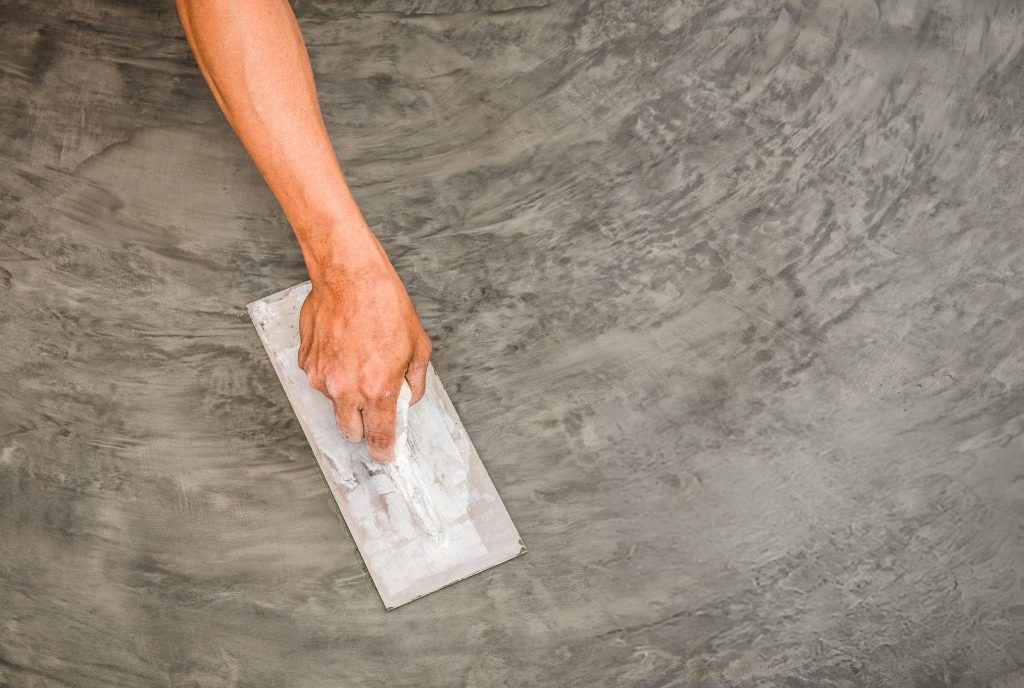
What Is Concrete Staining — How It Actually Works
There are two fundamentally different types of concrete stain, and they work in completely different ways. Understanding the difference is essential to making the right choice for your project.
Acid-Based Concrete Stain
Acid stain is a reactive chemical solution — typically metallic salts in an acidic carrier — that penetrates the concrete surface and reacts with the minerals (specifically calcium hydroxide) in the cement paste. The chemical reaction produces iron oxide compounds and other colored minerals that become a permanent part of the concrete matrix.
The result is not a uniform color. It is a mottled, variegated, marbled effect with natural variation — no two areas look identical, and no two floors look the same. Tones range from earthy amber, walnut brown, and terra cotta to soft sage green and blue-gray. Acid stain is not suitable if you want a precise, consistent color across a large area. It is ideal if you want a floor that looks like it was made that way — organic, rich, and one of a kind.
Because acid stain is a chemical reaction, the outcome depends on the concrete’s specific mineral composition, age, mix design, and porosity. Test patches are not optional — they are required to get a predictable result.
Water-Based Concrete Stain
Water-based stain works differently. It penetrates the concrete pores and deposits color pigment within the surface layer. The color is more predictable and uniform than acid stain and is available in a much broader range — from muted neutrals to bold commercial colors that can be matched to brand palettes.
Water-based stain dries faster, has no fumes, and is easier to apply in occupied spaces. It provides consistent, repeatable results across large areas, making it the better choice for retail environments, corporate offices, and anywhere a specific color is required.
Neither type peels, chips, or fades the way paint or epoxy does. Both require proper surface preparation and sealing to perform long-term.
Why Concrete Staining Matters
The Real Problem With Painted or Coated Concrete Floors
Every year, business owners and homeowners contact us after a failed floor. They painted their concrete two years ago, and now it is peeling in sheets. They applied a color coat over an unprepped slab and it bubbled within months. Here is why this keeps happening and why staining is a fundamentally different solution.
Why Paint Fails on Concrete
Paint creates a film on top of the concrete surface. That film is vulnerable to three things that concrete floors experience constantly: moisture vapor transmission from below, thermal expansion and contraction that flexes the slab, and point loading from foot traffic and equipment. Eventually, the bond between paint and concrete fails. The film delaminates, peels, and needs to be stripped and redone.
Why Stain Does Not Fail the Same Way
Stain has no film to delaminate. The color is inside the concrete, not on top of it. You cannot peel it off because there is nothing to peel — the color is part of the slab. As long as the sealer is maintained (typically every 1–3 years depending on traffic), the color is permanent.
The Maintenance Cost Comparison
Painted concrete floors in commercial environments typically need repainting every 2–4 years. Each repaint requires stripping the old coat, reprepping, and recoating — a time-consuming, costly process. Stained concrete requires only periodic resealing, which is a fraction of the cost and labor. Over a 10-year period, stained concrete typically costs significantly less to maintain than a painted alternative.
Concrete Staining Applications — Where It Works Best
Polished concrete performs in almost every setting. Here are the most common applications we handle and why each benefits specifically from polished concrete:
Stained concrete lets you create a branded, distinctive floor environment without the cost of specialty tile or stone. Custom colors can be matched to brand guidelines. High-traffic retail environments benefit from the durability of stained concrete — no wear lanes, no color fading, no need for mats or runners.
Stained concrete is the preferred flooring for food service environments that want an upscale look without the maintenance of hardwood or the bacteria-trapping grout lines of tile. The sealed surface is easy to clean, handles spills and cleaning chemicals, and looks better with age rather than worse.
A stained concrete lobby floor projects a modern, intentional aesthetic at a fraction of the cost of marble or large-format tile. Combined with a high-gloss sealer, the result is a professional, sophisticated entrance that requires almost no maintenance.
Stained concrete floors in residential settings have moved from industrial lofts to mainstream home design. The warmth and variation of acid stain works particularly well in open-plan living spaces, kitchens, and basements. Properly sealed and maintained, stained concrete outperforms laminate, vinyl plank, and tile on durability and longevity.
Water-based stains with UV-stable pigments work on outdoor concrete. Combined with a slip-resistant sealer, stained concrete patios and pool decks are a significant upgrade over plain gray slabs. Acid stain is generally not recommended for outdoor use in climates with significant freeze-thaw cycling without proper sealing.
Stained driveways and walkways dramatically improve curb appeal at much lower cost than pavers or decorative overlay systems. The stain becomes part of the concrete, so it handles vehicle traffic, weather, and UV exposure without degrading the way applied coatings do.
Not Sure Which Service Is Right for You?
We offer a free on-site consultation — Warren personally visits and shows you a sample result before you commit to anything.
Why Choose Us
We Treat Your Floor Like It's Our Own
Warren James — owner and lead craftsman — shows up to every job personally. With over 15 years in the industry, we know that prep work and attention to detail separate beautiful floors from mediocre ones.
- Free on-site sample — see results before you commit
- Dry-grind process — zero dust mess
- Works around your schedule, including off-hours
- Strong warranty on every job
- ⭐ Google Verified
- 🏠 HomeAdvisor
- 📋 Angi Listed
- ⭐ Yelp Reviewed
The Staining Process — What We Do and Why Each Step Matters
Step 1 — Surface Assessment
We inspect the concrete for existing sealers, coatings, contamination, and condition. Concrete that has been sealed or coated will not accept stain — the sealer blocks penetration. We identify what is on the surface and determine the prep required to get proper stain absorption.
Step 2 — Surface Preparation
This is the most important step. Improperly prepped concrete produces uneven, blotchy stain that looks bad and cannot be corrected without grinding back down to bare concrete and starting over. We use diamond grinding, shot blasting, or chemical etching depending on the surface condition to open the concrete pores and ensure even stain absorption across the entire floor. Existing coatings, sealers, grease, oil, and curing compounds are fully removed. Any cracks or spalls are repaired. The surface is cleaned and allowed to dry completely before staining.
Step 3 — Test Patch
For acid stain, we always apply a test patch first — typically in an inconspicuous area. Concrete varies in mineral composition, and the color that develops depends on the specific slab. The test patch shows you exactly what the finished color will look like on your concrete. We do not proceed to the full floor until you approve the test result. For water-based stain, we confirm the color matches your sample expectation before full application.
Step 4 — Stain Application
Acid stain is applied by hand, typically with a pump sprayer and brush, in overlapping strokes that create natural variation. Technique matters significantly — professional application produces a rich, marbled result; poor technique produces streaks and blotches. After application, the reaction develops over 4–8 hours. After reaction time, the acid is neutralized with a baking soda solution and the residue is rinsed off. The floor is allowed to dry completely before sealing. Water-based stain is applied by sprayer, roller, or brush in multiple thin coats. Multiple coats build color depth; a single coat typically produces a lighter, more translucent result.
Step 5 — Sealing
Sealing is not optional — it is what protects the stain and makes the floor cleanable. We apply the sealer appropriate for your environment: acrylic sealer for residential use, polyurethane or polyaspartic for commercial and high-traffic areas, and slip-resistant formulas for outdoor or wet areas. The sealer determines the final sheen level — matte, satin, semi-gloss, or high-gloss. We discuss this with you before application. A high-gloss sealer on acid-stained concrete produces a dramatically different look than a matte sealer on the same floor.
Step 6 — Cure & Final Inspection
Sealer cure time is typically 24–72 hours before normal foot traffic and 7 days before heavy equipment. We walk the floor with you at completion. If anything does not meet expectations, we address it before we leave.
Owner Operated · Free On-Site Sample
Maintaining Your Stained Concrete Floor
One of the main reasons business owners and homeowners choose stained concrete is the low maintenance requirement. Here is the honest picture:
- Daily cleaning — sweep or dust mop to remove debris. Damp mop with clean water or a pH-neutral cleaner. No harsh chemicals or abrasive scrubbers.
- Spill cleanup — wipe up spills promptly. The sealer protects against most common spills, but prolonged exposure to acids (citrus, vinegar, harsh cleaners) can eventually etch the sealer.
- Resealing — commercial floors with heavy traffic: reseal every 1–2 years. Residential floors: every 2–3 years. Outdoor surfaces: annually or as needed depending on weather exposure.
- Do not use wax — wax builds up on stained concrete and creates a yellowed, uneven appearance. The sealer replaces wax. Do not add wax on top.
- Scratch prevention — use felt pads under furniture. Avoid dragging heavy objects directly across the floor.
Areas We Serve
We provide concrete staining services across Northern Colorado and Southern Wyoming:
Not seeing your city? Call us. We serve a wide area across the Front Range and Southern Wyoming.
What Our Clients Are Saying
Our Testimonials
⭐⭐⭐⭐⭐ 4.9 — Based on 67 verified Google Reviews
★★★★★
“Warren did an incredible job on our garage floor. He came out, showed us a sample, and the final result far exceeded our expectations. Highly recommend.”
— Mike T., Fort Collins CO
★★★★★
“Owner operated means you actually deal with the expert the whole time. Zero mess from the dry-grind process. The floor looks like glass. Worth every penny.”
— Sarah L., Windsor CO
★★★★★
“The free sample was what sold me. I could see the exact result before committing. The whole project was done on time, on budget, and the floor is stunning.”
— James R., Greeley CO
Common Questions
Frequently Asked Questions
For water-based stain, the color closely matches the sample because it is pigment-based. For acid stain, the color that develops depends on your specific concrete’s mineral composition — which is why we always do a test patch. We will not proceed to the full floor until you see and approve the test result on your actual concrete.
Not without removing the existing sealer first. Sealer blocks stain penetration. We grind or chemically strip the existing sealer before staining. If the sealer is deeply embedded, additional prep may be required.
Probably yes, with proper preparation. Oil contamination and chemical stains can block acid stain absorption and produce light or blank spots in the finished floor. We address contamination during prep. Repaired areas will absorb stain differently from the surrounding concrete — we tell you upfront what to expect in terms of visible variation.
It depends. If the existing stain has been sealed, you are resealing over color — you can change the sealer sheen level but not the color. To change the color, the sealer and potentially the stain layer need to be ground off and the floor restained. We assess existing stained floors during the free quote visit and give you a clear picture of your options.
Most residential staining projects take 1–2 days. The stain itself may need reaction time (for acid stain) plus dry time before sealing. Sealer requires 24–72 hours of cure time before normal use. Commercial projects with larger square footage take proportionally longer.
Cost depends on square footage, surface condition and prep requirements, stain type, number of coats, and sealer type. Contact us for a free on-site quote with all prep costs included.
Get a Free Quote With Color Samples
Call 970-215-9106 or visit northernconcretepolishing.com/contact-us. We come to your location, assess your concrete, bring acid and water-based color samples, and give you a written quote with no obligation.